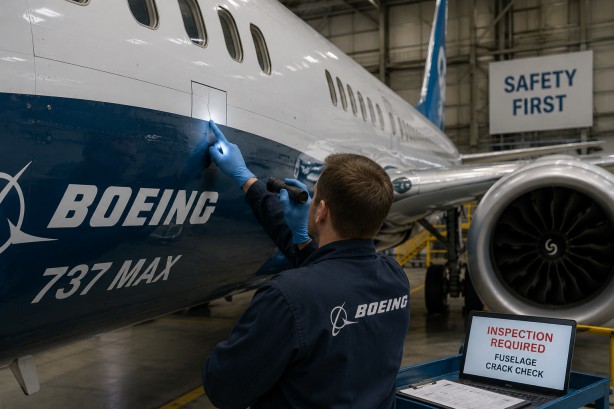
The Federal Aviation Administration (FAA) has mandated inspections for Boeing 737 Max aircraft to check for potential cracks in a structural component of the fuselage. This directive will impact around 471 airplanes, with inspections slated to commence in September. The focus of these inspections is the bear strap, a component consisting of structural sheets that support the fuselage around the exit doors. This move comes in response to similar cracks found in older Boeing 737 Next Generation models, which led to previous inspection requirements for those aircraft.
Although the 737 Max fleet has not yet reported any cracks, aviation regulators have noted the use of a similar design and manufacturing process as the 737 Next Generation, thus raising the possibility of similar issues arising. The FAA emphasized that undetected cracks could compromise a significant structural component, potentially affecting the aircraft’s overall integrity. Such concerns highlight the need for vigilance despite the absence of current reports of damage.
Boeing has been proactive in addressing the issue since it was identified in 2019. The company has been collaborating with airlines to support the mandatory inspections, which aim to detect and rectify any problems before they become critical. Boeing’s commitment to these checks underscores the importance of maintaining aircraft safety standards and ensuring that any emerging issues are promptly managed.
This directive adds another layer of scrutiny to the 737 Max, which has been under intense examination following past safety incidents and ongoing concerns over manufacturing and engineering quality. The aircraft model was previously grounded worldwide after two tragic crashes in 2018 and 2019, which led to significant safety reviews and modifications. As the industry continues to navigate these challenges, ensuring the airworthiness of the 737 Max remains a priority for operators and regulators alike.