
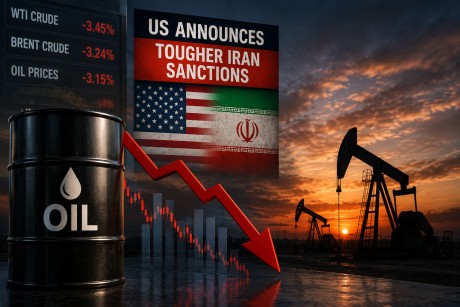
Oil prices experienced a significant decline on Tuesday, dropping over 3% to hit their lowest point in a week. This decrease followed as investors evaluated the effects of newly imposed US sanctions on Iran. Brent crude, the global oil benchmark, saw its price fall by 3.1% to $89.31 per barrel, while West Texas Intermediate (WTI) recorded a 3.34% decrease to $82.17. This downturn came after both benchmarks had posted notable gains the previous week, with Brent climbing 6.6% and WTI advancing by 5.7%.
The recent US sanctions aim to increase pressure on Iran by targeting businesses and countries engaged in economic transactions with Tehran. These measures are part of ongoing efforts to disrupt Iran’s economy amid rising tensions between the two nations. As a result, the oil market remains particularly volatile, especially concerning the developments surrounding the Strait of Hormuz, a crucial corridor for global energy transport.
Iranian authorities have issued warnings that oil shipments through the Strait of Hormuz could be halted if the US continues to escalate pressure. This potential disruption has heightened concerns about oil supply security. Additionally, shipping risks have risen following reports of a tanker being struck near Oman’s Musandam peninsula. Further complicating the situation, ongoing attacks in the Red Sea contribute to the uncertainty affecting global energy supplies.
Despite these geopolitical tensions and risks, oil prices have declined as traders concentrate on the implications of the new sanctions and their potential impact on Iranian oil exports. The market’s attention is focused on whether these measures can significantly influence Iran’s ability to export oil, which is a critical factor in global supply dynamics.