
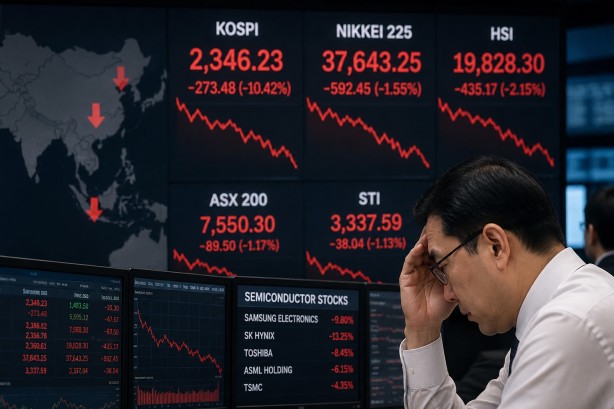
Asian stock markets experienced a downturn on Tuesday, with South Korea’s Kospi index suffering a significant drop of over 10%. This decline was primarily driven by steep losses in semiconductor stocks, notably affecting major players like Samsung Electronics and SK Hynix, which each saw their shares fall by approximately 12%. Investor concerns were heightened by the perceived threat of mounting competition from Chinese AI startups and chipmakers, which could potentially hinder the expansion of the global artificial intelligence sector.
The bearish trend was mirrored across most of Asia, as major markets like Japan’s Nikkei, Taiwan’s Taiex, Hong Kong’s Hang Seng, and China’s Shanghai Composite all closed with losses. In contrast, Australia’s S&P/ASX 200 stood out as the only major index in the region to record gains, bucking the overall downward trend.
Amid these market movements, the energy sector saw a reprieve as oil prices decreased. This easing came as tensions between the United States and Iran showed signs of abating, fueling optimism for the resumption of diplomatic discussions and alleviating fears regarding global energy supply disruptions.
Investors are closely monitoring these developments as they assess the potential impact on future market performance. While the semiconductor industry faces challenges from increased competition, the broader economic implications of geopolitical shifts continue to play a critical role in shaping market sentiment.
Overall, the day’s trading underscored the volatility and interconnected nature of global markets, with geopolitical tensions and industry-specific challenges contributing to a complex investment landscape.