
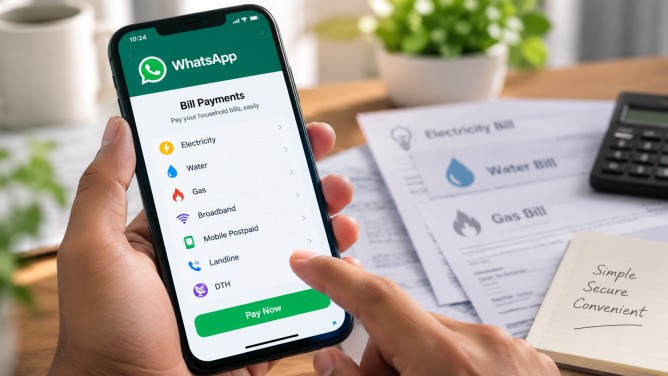
WhatsApp has enhanced its digital payment offerings by launching a new feature that enables users to pay utility bills directly through the app. This development allows users to manage and settle bills for essential services like electricity, gas, and water, as well as payments for FASTag, insurance, credit cards, and loans, all within the messaging platform.
The bill payment service is integrated with the Bharat Bill Payment System (BBPS), a network that supports over 22,700 billers across 30 categories. This broad network ensures that users have a wide range of service providers available for bill payment through WhatsApp. The process is straightforward: users can navigate to the bill payment section from the app’s home screen, choose a bill category and provider, enter their account details, and confirm the payment amount before proceeding with the transaction.
WhatsApp offers multiple payment methods to accommodate user preferences, including Unified Payments Interface (UPI), debit cards, and credit cards. Additionally, the platform provides users the ability to view past transactions, keep track of upcoming bills, and manage several accounts with the same service provider, enhancing the convenience for users who manage multiple services.
This initiative marks a significant step in WhatsApp’s evolution into a comprehensive digital-services platform, allowing users to conduct a variety of daily tasks from within a single application. By offering seamless payment integration, WhatsApp strengthens its appeal as a multifunctional tool rather than just a messaging app, minimizing the need for users to switch between different applications for financial tasks.
The move underscores a broader trend of messaging platforms increasingly incorporating digital financial services. As technology companies strive to make routine payments and transactions more accessible, these integrations reflect the growing demand for convenience and efficiency within the existing digital ecosystems that consumers are already familiar with.