
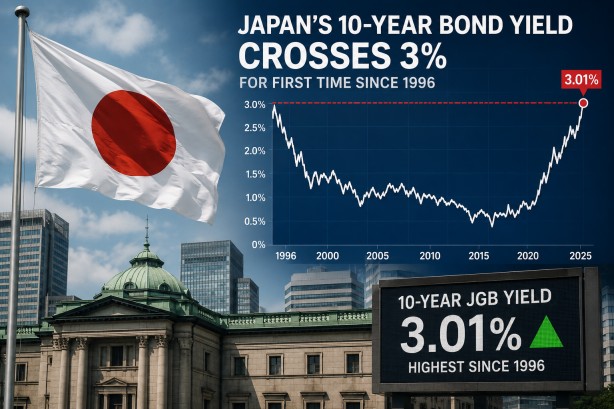
Japan’s 10-year government bond yield has surpassed 3% for the first time since 1996, signaling a pivotal change in the nation’s bond market dynamics. This development enhances the attractiveness of domestic fixed-income assets and is prompting Japanese investors to reconsider their international bond investments. Through August 22, official data indicates that Japanese investors have already recorded a net outflow of ¥3 trillion ($18.7 billion) from overseas debt markets this year.
The higher yields on Japanese bonds are making them more competitive compared to foreign investments, especially when factoring in the costs associated with currency hedging, which diminish the returns on overseas assets. A survey of 82 Japanese corporate pension funds reflects this shift, revealing the strongest net intention to boost domestic bond holdings since the survey’s inception in 2008. This trend could potentially reverse the historical flow of Japanese capital into global debt markets.
Historically, Japanese investors have been significant purchasers of U.S. Treasuries and other international sovereign debt. A decline in these overseas purchases could exert upward pressure on global bond yields and borrowing costs. This shift in investment strategy by Japanese investors is noteworthy, as it could have substantial implications for international financial markets.
The upward movement in Japanese bond yields has been influenced by various factors, including inflation concerns, anticipated rate hikes by the Bank of Japan, and growing apprehensions about Japan’s fiscal health. Despite these pressures, analysts suggest that the current trend is more indicative of a gradual realignment towards domestic assets rather than an abrupt, large-scale withdrawal from foreign markets.